

Hungarian
The Tobacco District Hungarian House opened on 15 May 1949. Its history records that about 1,000 Hungarians answered a 1933 newspaper call for tobacco workers.S8
Tobacco District Hungarian House → : the history of tobacco in Delhi, Ontario
The Crop That Built a Town.
Delhi, Ontario • Norfolk County
Heart of the tobacco country
That’s what the town’s sign said in Canada’s centennial year. For most of the twentieth century, flue-cured tobacco shaped Delhi: its farms and kilns, its halls and newcomers, its research station and its auction floor. This is that history, from the record and the people who lived it.

 Contemporary illustration
Delhi grew up on Big Creek. Local histories say Frederick Sovereen settled there around 1812, kept a tavern and made plug tobacco, a century before the flue-cured boom. The crossroads went by Sovereen’s Corners, then Fredericksburg, before taking the name Delhi in 1856.S36
The Quance family ran the mills on the creek from 1874 until 1970. In the 1930s those mills cut the lumber for the new crop’s kilns, laths and barns.S33 In 1933 the federal government opened a tobacco research substation just 4 km west of town.S1
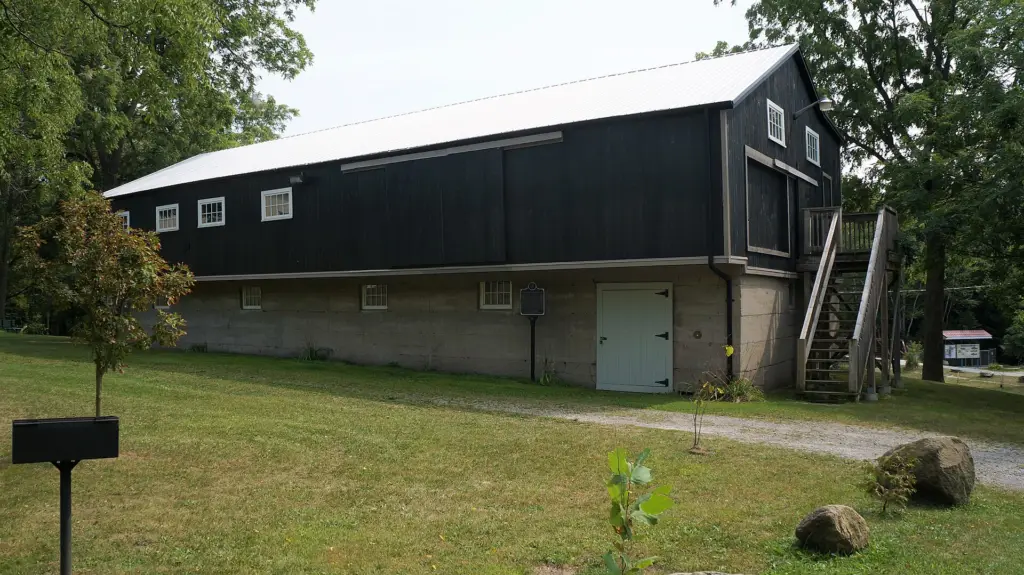
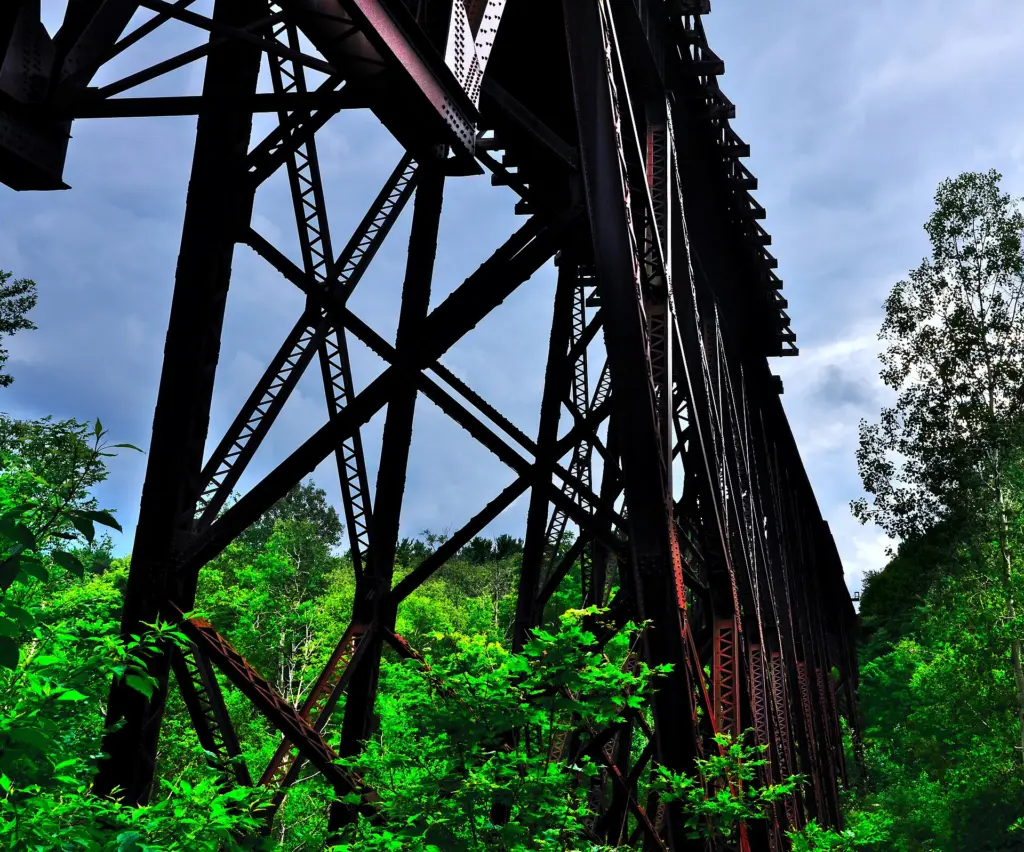
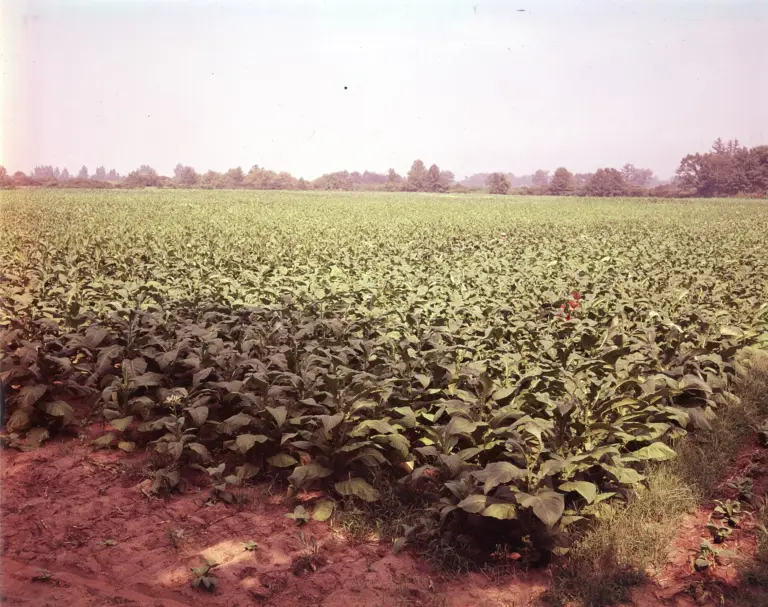
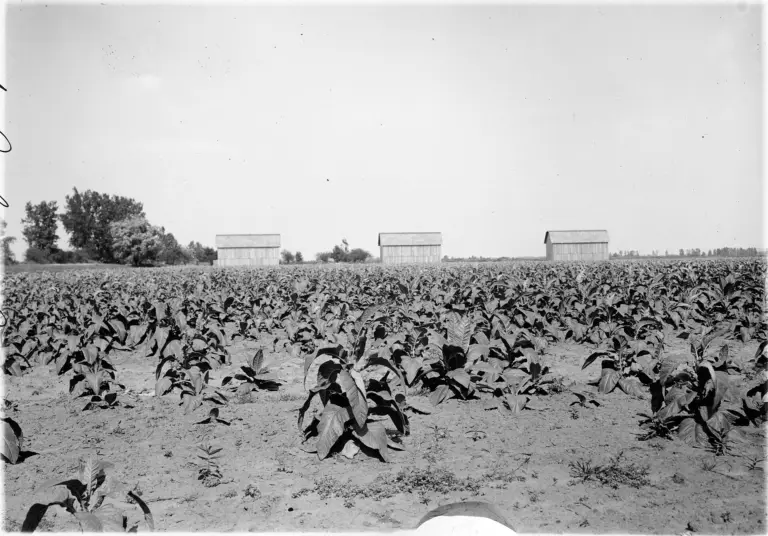 ICa. 1920 · AO
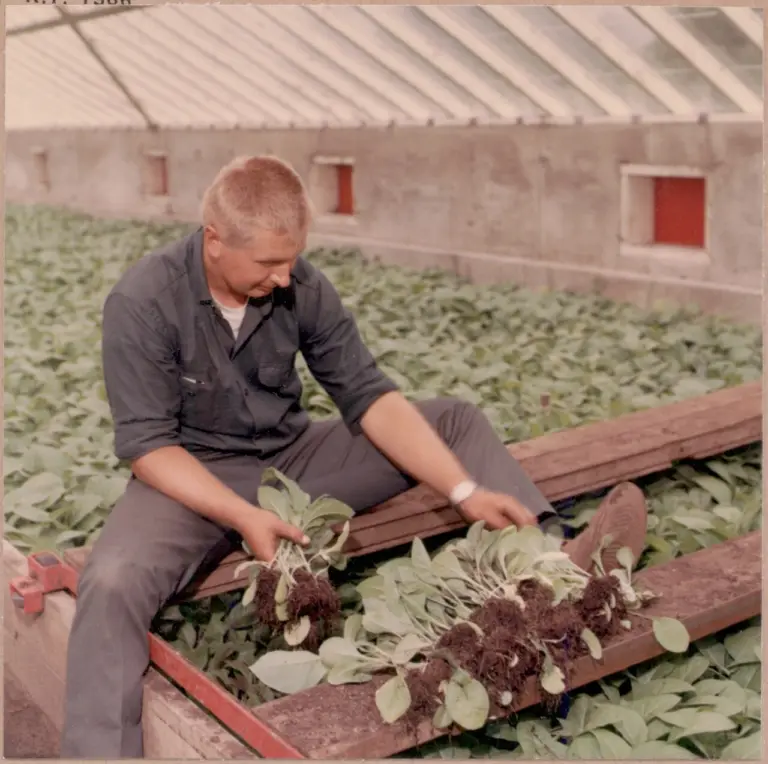 IICa. July 1969 · AO
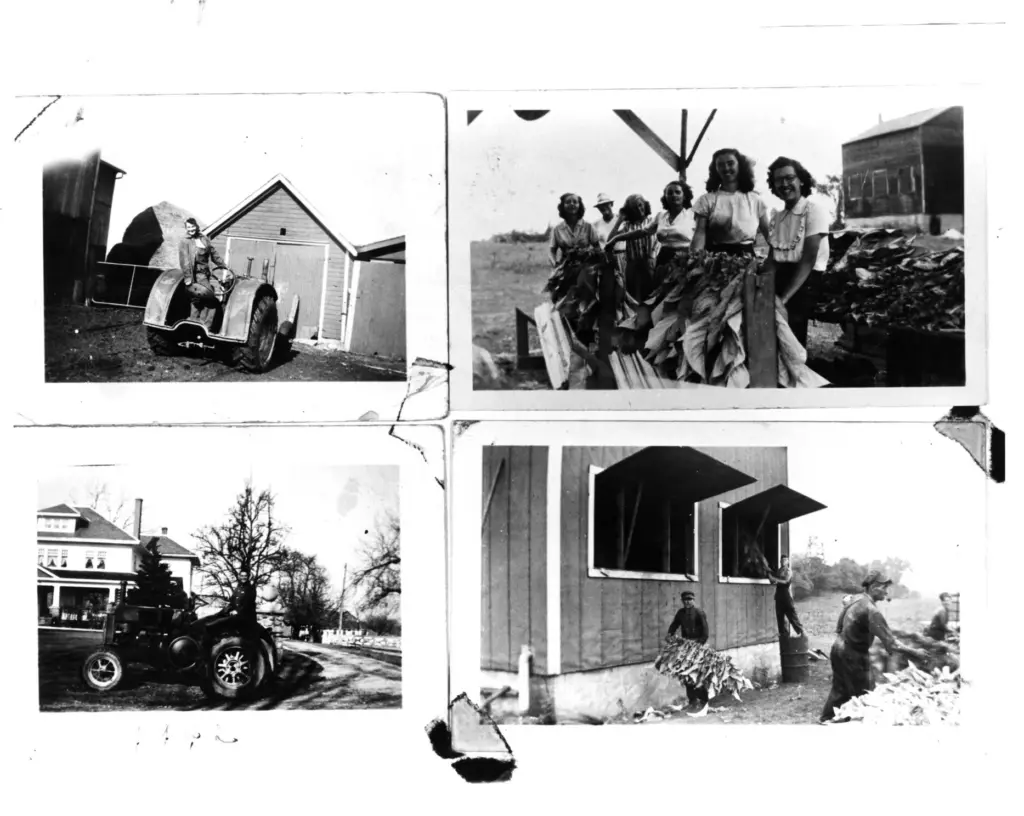
 IIICa. 1945 · AO
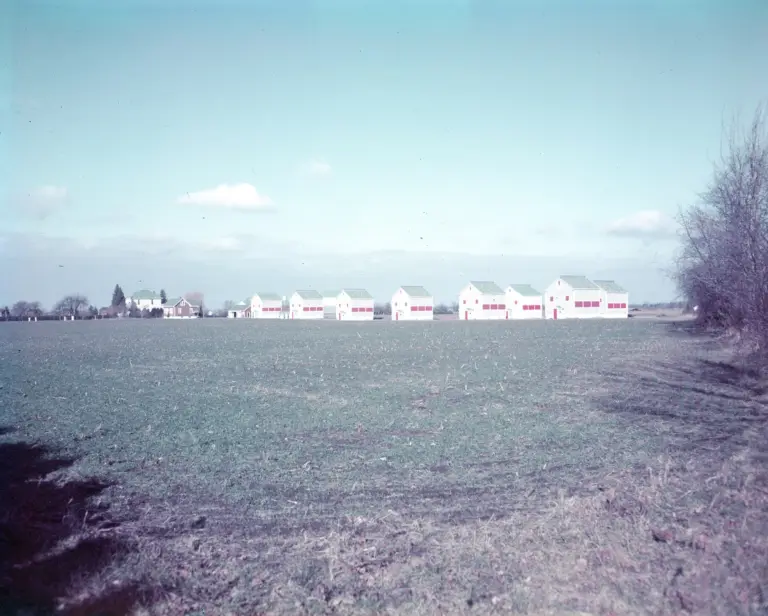 IV1952 · AO
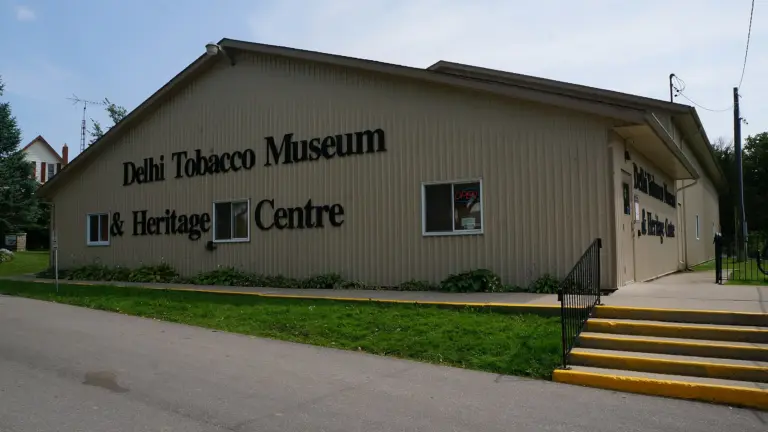
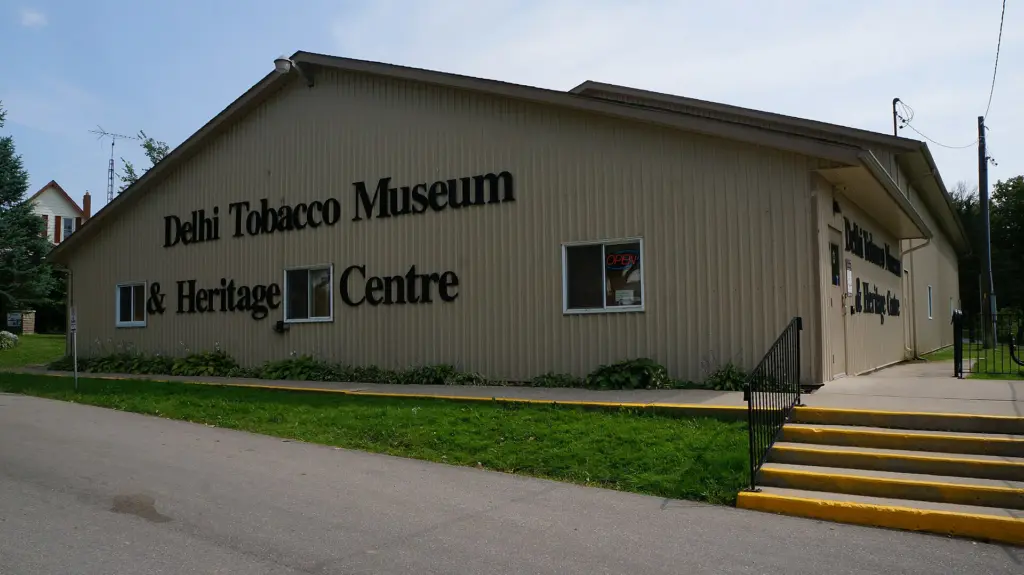
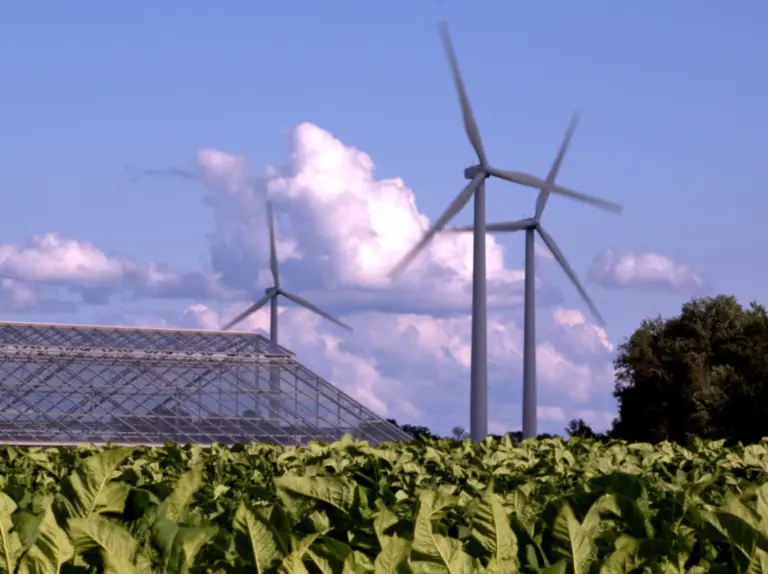 V2011 · Sean Hurley
Tobacco drew newcomers to Delhi from across Europe. Many started as labourers, became sharecroppers and saved for farms of their own. Then they built clubs, churches and halls, and some still stand. The Delhi Tobacco Project recorded their stories in English, Flemish, French, Hungarian, Lithuanian and Polish.S5
The Tobacco District Hungarian House opened on 15 May 1949. Its history records that about 1,000 Hungarians answered a 1933 newspaper call for tobacco workers.S8
Tobacco District Hungarian House →
A drama club formed in 1943 became the Belgian Club, whose hall opened in 1948. For nearly seventy years it hosted archery, feather bowling, pigeon racing and dances.S9
Delhi Belgian Club · closed 2017 →German-speaking settlers founded the German Association Club of Delhi on 20 April 1936. Their German Home was built in 1949 and held its first dance in November 1950.S24
Delhi District German Home →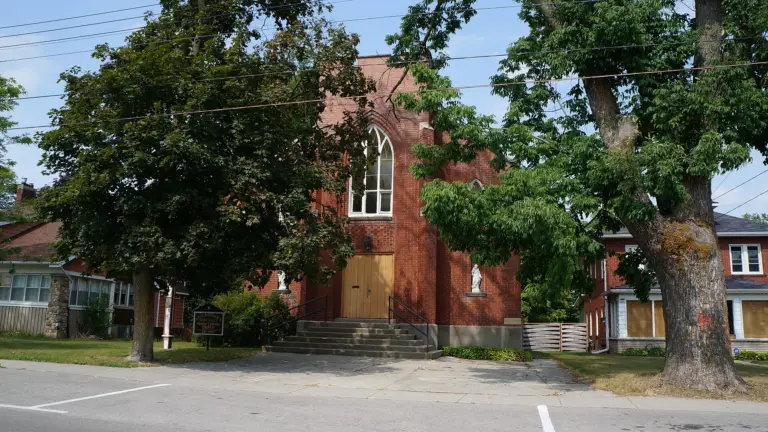
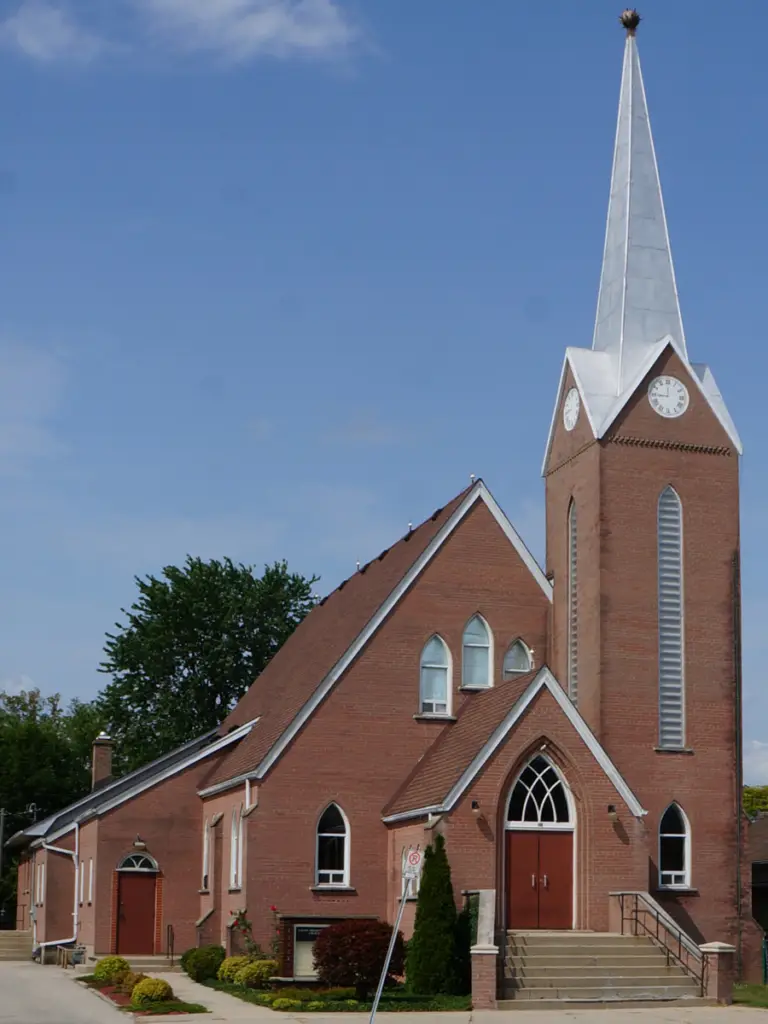
Lithuanians were working Delhi-area tobacco farms by 1930–31, and some grew their own crop from 1932. By the Second World War, about a hundred Lithuanian families and individuals lived around Delhi.S29
St. Casimir Church, Delhi →Polish, Ukrainian, Portuguese, Dutch and other families, and seasonal workers from Quebec, the Maritimes, the Caribbean and Mexico. Their chapters are still being researched.S5S18
Share your family’s story →Directed by Terence Macartney-Filgate for the NFB’s Candid Eye series. The film plays from nfb.ca.S30S31 Still: a woman in a tobacco field, ca. 1945, Archives of Ontario, public domain.
“Made 450 in 5 weeks.”
“$14 per day plus room and board.”
“Delhi’s camp misery”
The first flue-cured tobacco is grown in extreme southwestern Ontario.S1
They buy the old Chrysler farm at Lynedoch and harvest a 30-acre commercial crop, which the federal history calls the first of the new belt.S2
Norfolk’s flue-cured production overtakes the total tobacco production of Essex and Kent.S3
A federal tobacco research substation opens on 20 hectares about 4 km west of Delhi.S1
Permits are needed to work on a tobacco farm, and army units help bring in the crop.S1
Delhi’s Hungarian community opens its hall on 15 May 1949.S8
Growers form a marketing board, with quota and auction exchanges at Delhi, Tillsonburg and Aylmer.S10
The Delhi station buys a bulk-curing kiln from the United States to test, the first in Canada.S1
Canada’s Seasonal Agricultural Worker Program begins, with Jamaica.S18
Ontario plants 128,000 acres of flue-cured tobacco, up from 30,000 in 1933.S4
The Delhi Tobacco Project records 308 cassettes of oral history, about 267 hours, in six languages.S5
A museum built in the form of a typical tobacco pack barn goes up above Quance Park in Delhi.S6
Production has fallen nearly 50% since 1982, and growers from 2,500 to 1,500, Norfolk’s MPP tells the Legislature.S12
Agriculture Minister Gerry Ritz announces the federal Tobacco Transition Program at the Delhi exchange on 1 August. The Auditor General later puts it at about $284 million.S38S14
The Delhi exchange closes as the quota system ends.S11
planted in 1967, more than four times the acreage of 1933.
by 1971, close to three times the 897 lb an acre of 1933.
of Ontario’s flue-cured crop was grown within 20 miles of the Delhi research station, Agriculture Canada reported in 1973.
of all tobacco grown in Canada came from within 50 km of Delhi, Norfolk’s MPP told the Ontario Legislature in 1988.S12

of oral history, about 267 hours in six languages, recorded from 1977 to 1988 by the Multicultural History Society of Ontario and the Delhi Tobacco Museum. The voices of the people who grew it.
 Essex County · the old belt
 Delhi
Delhi Ca. 1945
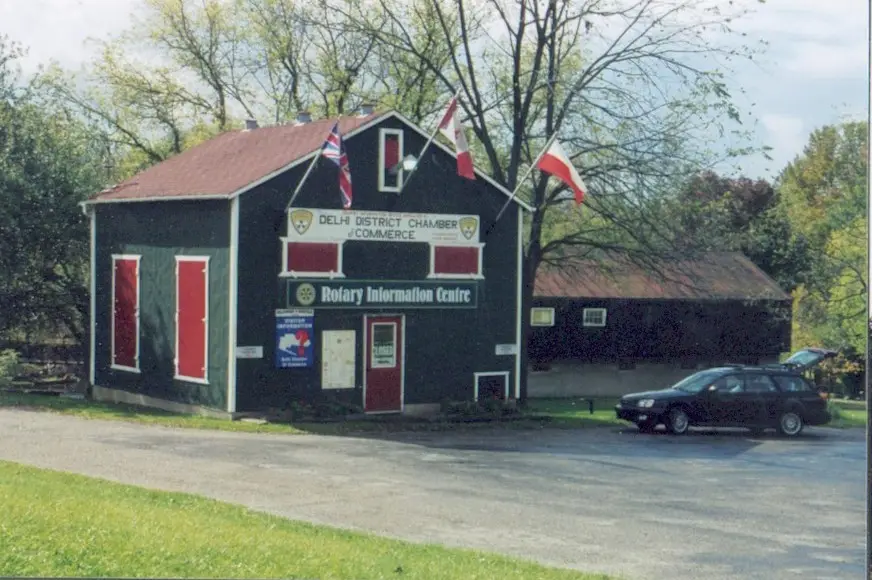 Second life
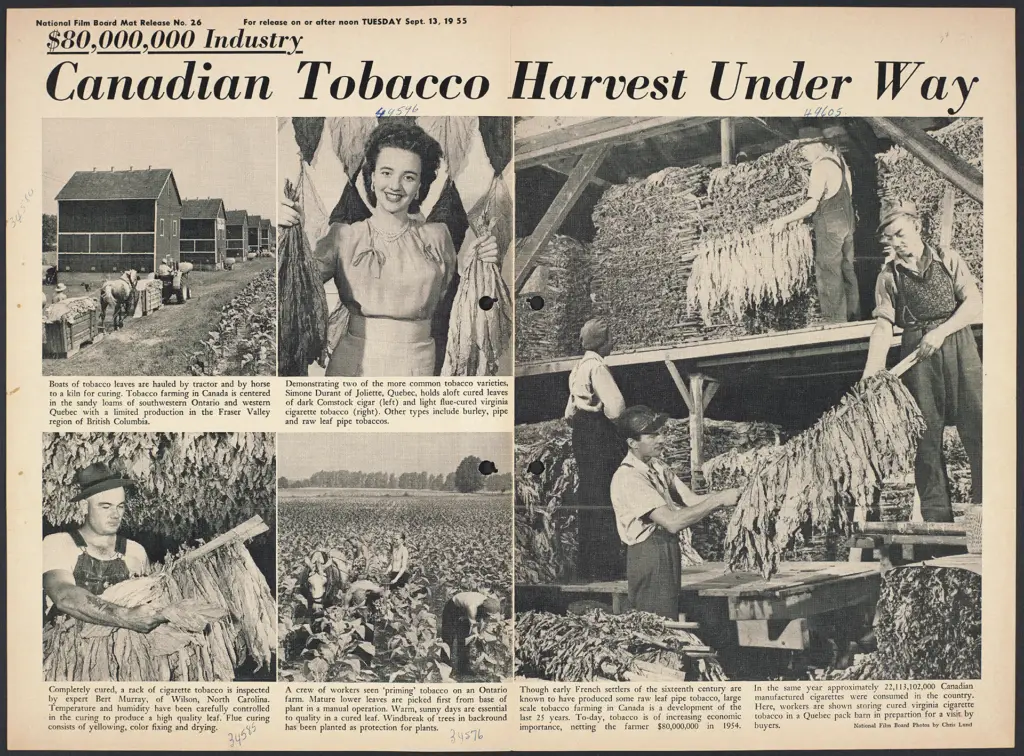 1955
1955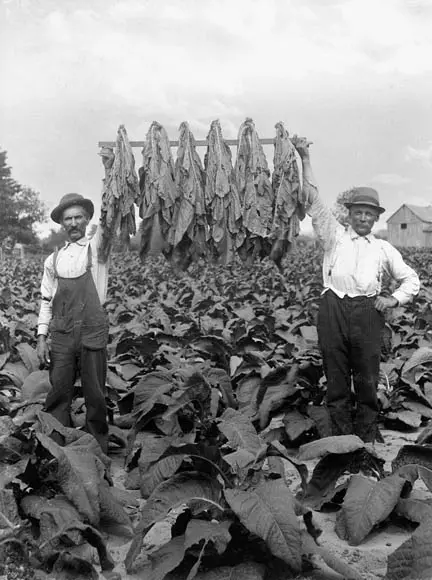 1900–1910
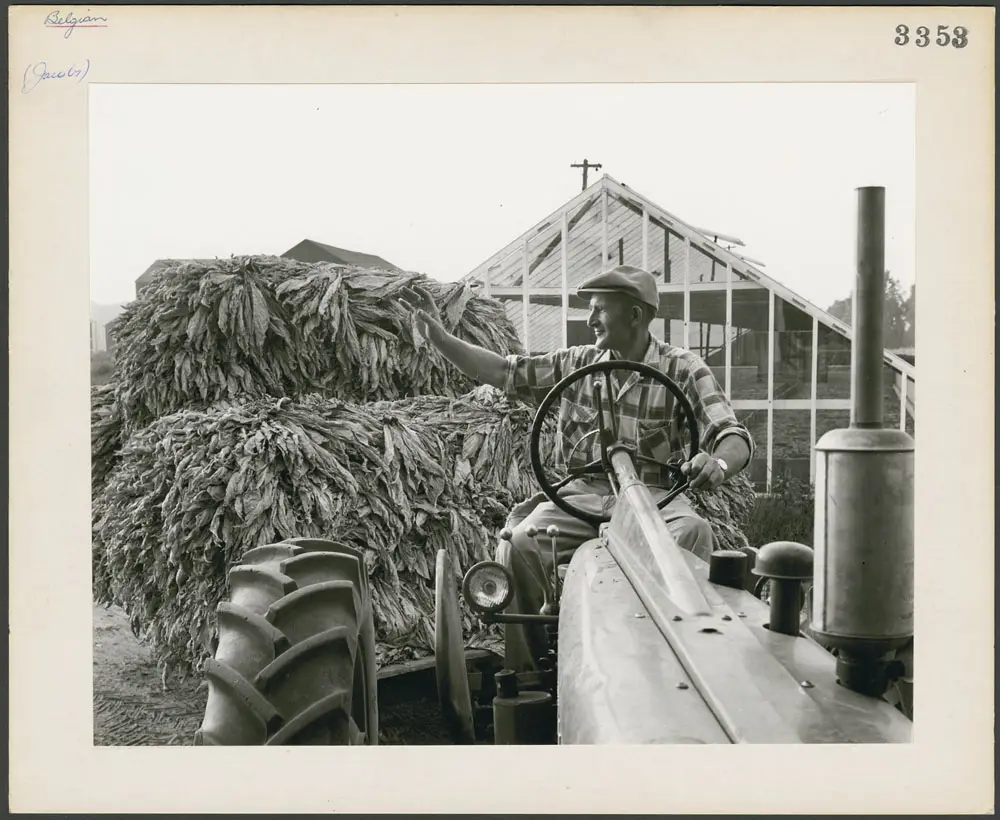 Vittoria, Norfolk
 Belgian families
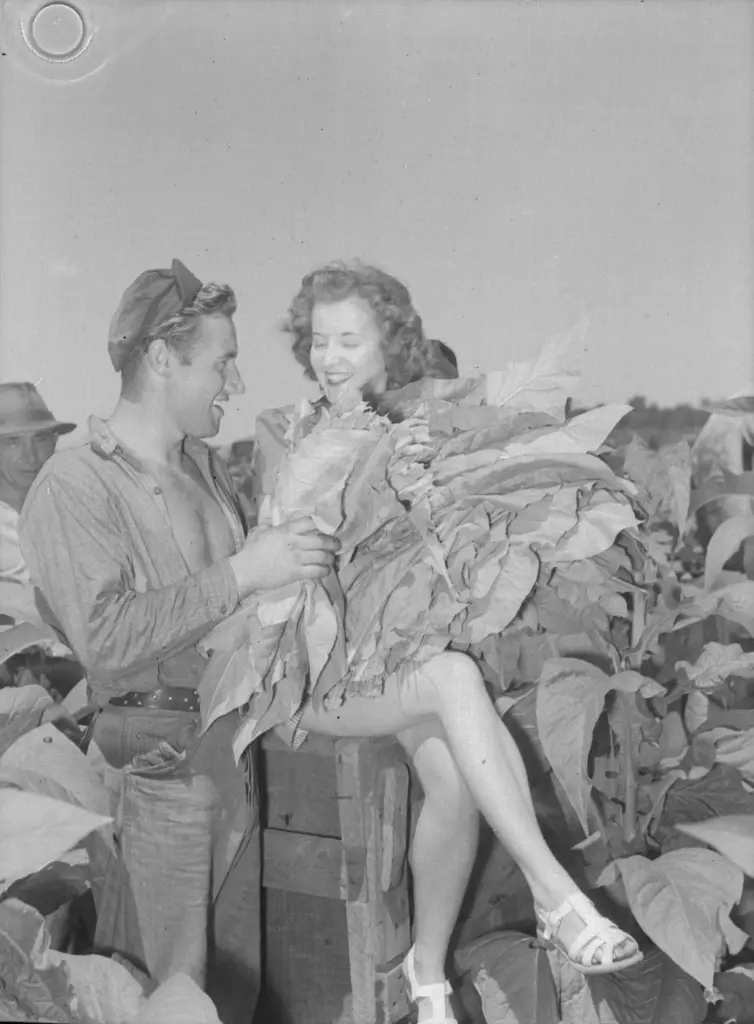 Ca. 1945
 Delhi
Delhi